Black mold is one of the most unwelcome sights a homeowner can find around a window. Besides looking unsightly, it can compromise air quality, stain trim, and even damage framing if left unchecked. This guide explains why you get mold on window surfaces in the first place, shows how to remove mold from windows without spreading spores, and lays out proven strategies to keep it from returning.
Why Does Black Mold Grow on Windows?
The most common trigger is moisture. When indoor humidity meets a cooler glass surface, condensation forms and lingers—creating a micro‑climate for spores to thrive. That’s why you often see mold on windows from condensation during Midwest winters or humid summers. Other culprits include:
-
Persistent leaks that soak the sill or frame (see our deep dive on window leaks explained).
-
Deteriorating caulk that lets rainwater seep behind trim.
-
Organic debris collecting in track corners, feeding mold colonies.
If you notice black mold on window sill corners, don’t ignore it; the same dampness that breeds mold can also invite pests like termites in windows.
Health and Structural Risks
Mold spores release allergens that aggravate asthma and respiratory conditions. Prolonged exposure may lead to headaches, skin irritation, or sinus issues. On the structural side, mold can etch paint, stain vinyl, and accelerate wood rot, all of which forces premature repairs.
Step‑By‑Step: How to Remove Mold from Windows
Follow these best‑practice steps to handle the job safely. If the contaminated area exceeds ten square feet, call a professional remediator.
1. Gear Up
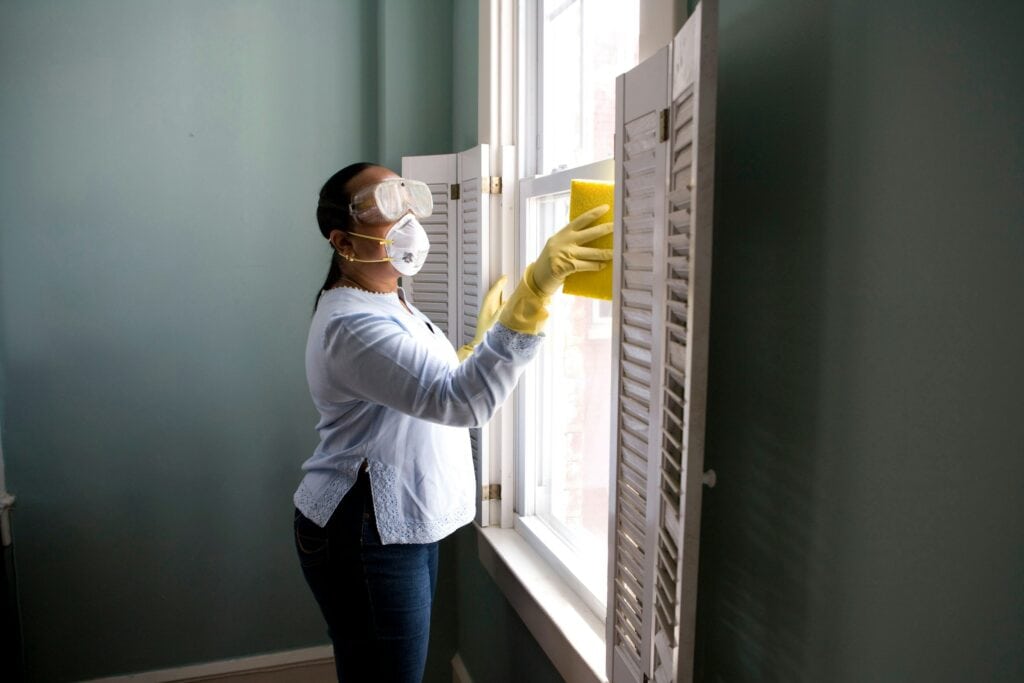
Wear gloves, goggles, and an N‑95 mask. Lay plastic sheeting beneath the window to catch debris.
2. Mix Your Cleaning Solution
For non‑porous vinyl or aluminum frames, a 1:10 bleach‑to‑water mix works. Prefer an eco option? White vinegar at full strength kills most household molds. Avoid mixing chemicals.
3. Apply and Dwell
Spray the moldy surface until saturated. Let the solution sit five minutes so it penetrates biofilm.
4. Wipe, Don’t Scrub
Use disposable microfiber cloths, wiping outward to keep spores from scattering. Repeat until the stain is gone.
5. Tackle the Seals
Wondering how to get rid of mold on window seals? Dip a cotton swab in vinegar and run it along the gasket groove. Replace any rubber weather‑strip that stays blotchy after treatment.
6. Rinse and Dry
Wipe with clean water, then dry with a lint‑free cloth. A box fan aimed at the sill speeds evaporation.
Dispose of used cloths and gloves in a sealed trash bag to prevent cross‑contamination.
Prevention: Stop Mold Before It Starts
Mold is stubborn, but consistent moisture control keeps it from coming back. Start by improving ventilation: run bath and kitchen fans for at least 15 minutes after steamy tasks, and keep interior doors open so air can circulate freely throughout the house. Equally important is reducing humidity; maintain indoor relative humidity between 35 and 50 percent with a dehumidifier, and relocate houseplants away from cold glass where condensation tends to collect.
Upgrade Aging Windows
Old, single‑pane units chill quickly, making condensation inevitable. Swapping them for energy‑efficient windows with warm‑edge spacers keeps the interior pane warmer and drier. Frame material also matters! Vinyl windows resist moisture absorption and never need repainting.
Certain operating styles shed water better, too. A tight‑sealing casement window compresses against its frame when latched, while an overhead‑hinged awning window can vent humid air even during light rain. For walls that don’t require ventilation, a fixed picture window removes tracks altogether, eliminating another mold trap.
If multiple units are past their prime, a full replacement window project pays dividends: fewer drafts, lower energy bills, and a fresh surface hostile to mold growth.
Control Condensation at the Source
Our post on what causes condensation on windows covers the physics in detail, but the quick fixes include using programmable thermostats to avoid large temperature swings and ensuring storm windows or interior inserts are properly vented.
When DIY Isn’t Enough
If mold keeps returning despite diligent cleaning, hidden moisture is likely at play, perhaps within the wall cavity or between insulated glass panes. Persistent growth may warrant pane replacement or full‑frame installation to restore a tight seal and modern drainage system.
Economic Costs of Ignoring Window Mold
Waiting on remediation can be more expensive than most homeowners expect. Besides higher medical bills from allergen exposure, untreated growth often forces repainting, drywall patching, or full sill replacement. Left for a year or more, spores can spread into wall cavities, carpeting, and HVAC ductwork, raising professional cleanup costs into the thousands. Early action keeps repairs surface‑level and preserves home value.
Seasonal Mold Watch Checklist
Stay ahead of trouble by inspecting windows at key times of year:
Spring
• Check for leaks after heavy rains.
• Clean pollen buildup that can trap moisture.
Summer
• Run dehumidifiers during heat waves.
• Wipe interior tracks weekly when AC is on high.
Fall
• Reseal exterior caulk before temperature swings.
• Clear gutters so overflow doesn’t splash window trim.
Winter
• Keep blinds slightly open to allow warm air flow.
• Monitor indoor humidity with a hygrometer (aim for 40%.)
FAQ: Quick Answers About Black Mold on Windows
Does sunlight kill mold on window frames?
UV rays can slow growth but won’t penetrate deep enough to eliminate colonies. Mechanical cleaning or replacement is still required.
Is bleach safe for colored vinyl frames?
Occasional use is fine, but prolonged contact can dull the finish. Vinegar or a peroxide‑based cleaner is gentler for routine wipe‑downs.
Why does mold keep reappearing after I clean it?
Persistent moisture or a hidden leak usually means spores never fully dry out. Upgrading to insulated, tightly sealed windows removes the moisture source.
Can new energy‑efficient windows prevent mold entirely?
No product is mold‑proof, but warmer interior glass and better drainage drastically reduce condensation, making recurrence unlikely.
Ready for a Healthier, Mold‑Free Home?
Black mold can be stubborn, but you don’t have to battle it alone. Mad City Windows offers free window inspections and customized replacement solutions that eliminate moisture problems at the source. Schedule your consultation today and breathe easier tomorrow.